Great hitters aren’t made during games—they’re built during the thousands of swings that happen long before opening day.
For the coaching staff at Texas Tech Softball, the 2026 Women’s College World Series runner-up, the offseason isn’t just about accumulating reps. It’s about creating an environment where athletes want to compete every time they step into the cage.
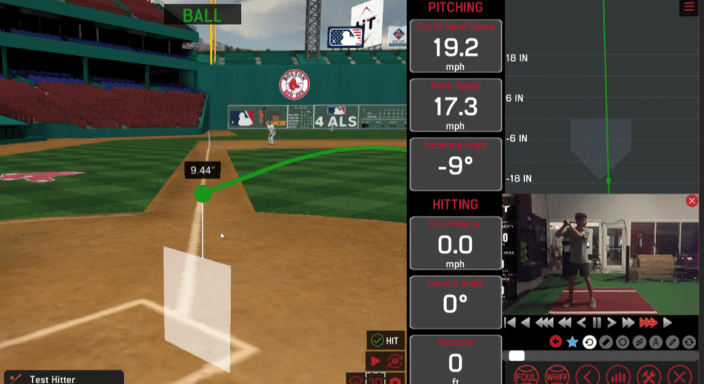
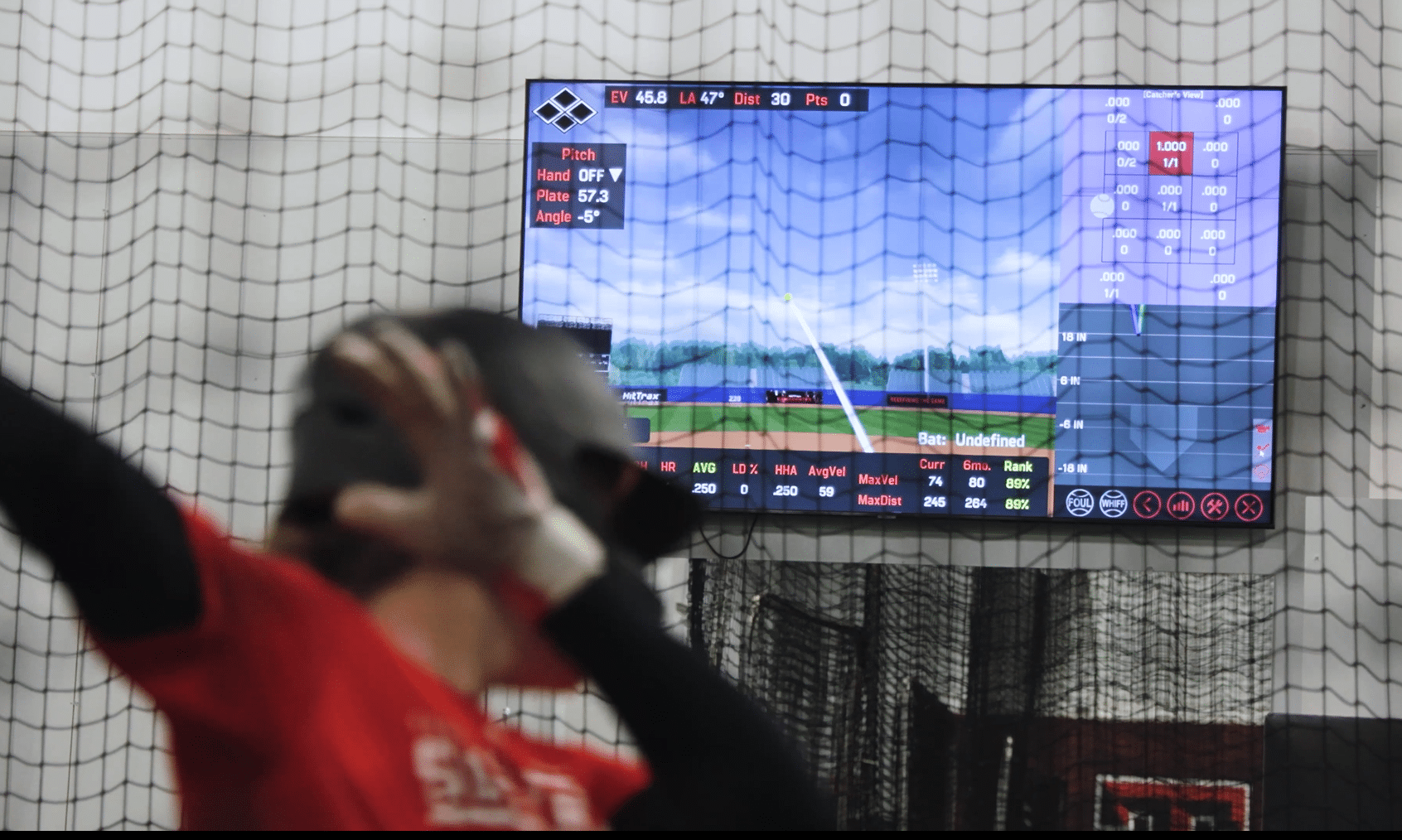
That’s where HitTrax has become an essential part of their player development strategy.
Competition Creates Buy-In
Texas Tech’s offensive program revolves around 13 hitting competitions that players complete throughout the year. While these competitions are traditionally held on the field, HitTrax allows the staff to recreate those same challenges inside the batting cage.
Using multiple pitching machines to simulate different pitch sequences—such as rise balls and drop balls—players practice the exact situations they’ll face during team competitions.
Each round is scored.
Each swing matters.
Instead of wondering whether a ball was hit hard enough, players receive immediate pass/fail feedback based on objective performance standards.
The result?
Players become invested in beating the competition—not just improving a statistic.
Turning Analytics Into Motivation
HitTrax provides coaches with an incredible amount of performance data, but Texas Tech has learned that numbers alone don’t always motivate athletes.
Instead, they use those metrics behind the scenes to build engaging training games.
One example is the Hard Hit Skill Challenge.
The coaching staff sets the success threshold at approximately 80% of each player’s maximum exit velocity. Every swing is instantly scored as either a success or a failure, creating an objective standard that’s personalized to each athlete.
Rather than asking players to memorize data points, they’re challenged to win.
That subtle shift transforms analytics into motivation.
Creating Consistency Through Measurable Drills
Each on-field competition consists of 80 swings.
Inside the cage, coaches recreate portions of those competitions using shorter 20-swing sessions inside HitTrax.
Players receive an overall score at the end of each round, allowing coaches to compare cage performance with on-field results throughout the season.
If a player consistently scores well during live competitions but struggles in controlled training, coaches know exactly where to investigate.
HitTrax becomes more than a measurement tool—it becomes a way to validate coaching observations with objective data.
Situational Hitting Every Day
Texas Tech also incorporates daily situational hitting into its offseason routine.
The staff has identified five offensive situations they believe produce the greatest impact during games, including:
- Runner on first with one out
- Runner on second with no outs
- Runners on first and second with one out
- Runners on first and third with one out
- Runners on second and third with two outs
Players spend just a few minutes each day working through these scenarios in HitTrax.
The software scores each at-bat based on how effectively the hitter accomplishes the objective—not simply whether they record a hit.
This gives coaches measurable data on which athletes consistently execute in game-like situations while reinforcing smart offensive decision-making every day.
Developing Elite Slappers
The coaching staff also uses HitTrax extensively with slap hitters.
Rather than focusing solely on batting average, slappers are challenged to record 25 successful hits each day against HitTrax’s highly capable virtual defense.
If they fall short?
They stay in the cage until they reach their goal.
This accountability system encourages consistency while making practice both challenging and engaging.
The difficulty of the virtual defense turns every successful bunt or slap into a meaningful accomplishment.
Technology Should Inspire More Swings
Perhaps the biggest takeaway from Texas Tech’s approach is that technology should encourage athletes to practice more—not simply collect more data.
Analytics are invaluable for coaches.
Competition is invaluable for players.
By combining both, Texas Tech has built an offseason development model that encourages athletes to spend extra time in the cage, compete against teammates, and continually improve.
As the Red Raiders proved with their run to the Women’s College World Series championship series, creating competitive practice environments can translate into success on the biggest stage.
For programs looking to maximize player development during the offseason, the lesson is simple:
Don’t just use technology to measure performance.
Use it to inspire it.